
Introduction & Context
Integrating AI into corporate workflows requires balancing performance with data privacy. Building custom model workflows allows companies to connect internal data sources to language models securely.
As systems scale, ensuring fast delivery and seamless frontend experiences is directly linked to performance optimization.
1. Structuring Corporate AI Workflows
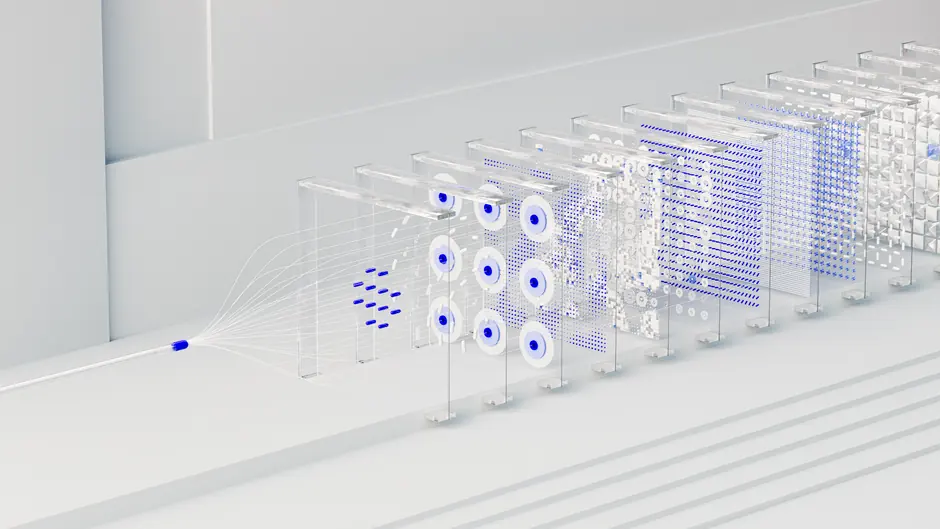
Corporate AI integrations connect databases, ticketing systems, and document repositories to AI systems. Processing data through automated pipelines allows companies to generate answers and insights while protecting sensitive information.

2. Comparative Analysis Table
Below is a detailed engineering analysis comparing legacy setups with modern structures designed to enhance speed and search presence:
| Feature Area | Third-Party Cloud AI | Custom Corporate AI |
|---|---|---|
| Data Control | Shared with external servers | Stored in private VPC network |
| Model Tuning | Limited generic fine-tuning | Tailored vector search inputs |
| Integration Scale | Constrained by API limits | Direct database integration |
3. Securing Internal Business Data
To prevent data leaks, custom AI workflows can use local models or private API instances. Sanitizing user queries and scrubbing personal data before model inference helps meet GDPR and compliance requirements.
To implement this flow cleanly on your own stack, reference the sample code integration pattern:
# Simple Python workflow: Sanitizing data before processing
import re
def sanitize_input(text):
    # Remove email addresses and phone numbers
    text = re.sub(r'\b[A-Za-z0-9._%+-]+@[A-Za-z0-9.-]+\.[A-Z|a-z]{2,}\b', '[EMAIL]', text)
    text = re.sub(r'\b\d{3}[-.]?\d{3}[-.]?\d{4}\b', '[PHONE]', text)
    return text
4. Frequently Asked Questions (FAQ)
How can I protect corporate data when using public APIs?
You can implement data scrubbing filters to remove PII and confidential information before sending data payloads to external APIs.
What is the typical setup time for corporate AI workflows?
A basic workflow can be deployed in a few weeks, while complex integrations with enterprise ERP databases may take several months.
Conclusion & Business Impact
Optimizing your systems using standard modular designs ensures long-term scalability. For systems analysis or technical deployment details, CYPHEX AGENCY works directly with systems engineers to deliver fast, secure custom systems.
System Logs & Discussion (2)
On-device quantized models are proving to be extremely cost-effective for initial classification. The RAG architecture detail matches our private testing parameters.
Are you running LLON/ONNX runtimes for the WebAssembly setups or calling native libraries via bridging in mobile?